
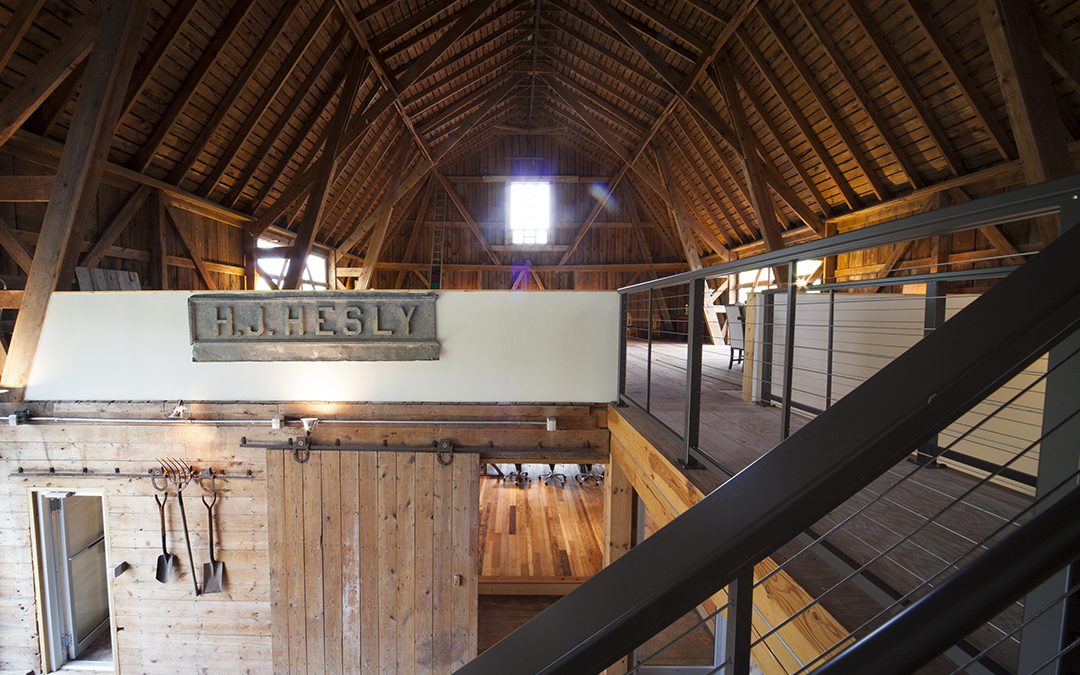
I’ve had an unusual gift since birth: a companion who knows me so well that we rarely need full sentences when we work together. My identical twin brother, Glenn, arrived three minutes before me, and together we surprised parents who were expecting one baby, not two. He’s been shaping my story ever since, including the part where I ended up owning a dairy barn ten hours from home. In ways I only later understood, that barn became part of how I’m learning to live this third period of life with more intention.
In the first year of my marriage, my wife helped me realize how accustomed I had become to communicating without complete sentences. You can probably picture the frustrations we both experienced as we worked on first-time homeowner projects together. I had decades of shorthand with Glenn; Jane understandably preferred full sentences, clear plans, and fewer assumptions. I did learn to communicate with my wife and life partner in more complete sentences, yet I still revert to partial sentences when Glenn and I work on projects.
Some years later, Glenn moved from Omaha to southern Wisconsin. Soon after, he began talking about Door County, Wisconsin, a place he and his wife had discovered. Eventually, they bought a cottage there and began making regular weekend trips. On birthdays, he would give me gifts featuring Door County logos. He kept saying, “Gordon, you have to come to Door County.”
I finally accepted his invitation and planned an RV trip from Omaha for my son, his best friend, and me. We set out early one August morning for a ten-hour drive. We picked up Glenn in southern Wisconsin, and he joined us, narrating the final few hours of the drive. When we arrived at the cottage, Glenn helped me back my RV into his driveway and set up “camp” for a week.
I felt the pull of Door County even before we arrived. As we drove north from Green Bay, something in the landscape felt familiar in a way I couldn’t quite explain. About three days into the visit, I was sitting on Glenn’s screen porch with a view through the trees to Kangaroo Lake, a soft breeze carrying the scent and sounds of the woods, when I heard myself say, “I don’t know when I’ve been so relaxed; I think I need a place in Door County.”
For Glenn, that is all he needs to hear. Among his many gifts, he holds a real estate license and can find properties with potential like no one I have ever met. Soon he had the local paper spread out on the porch, and we were looking at what was on the market. It was a daydream; two brothers on a summer porch, circling possibilities with a pen.
The next day, during a call with Jane back in Omaha, I mentioned that today’s plans included driving around to look at real estate. Jane said, “Gordon, you aren’t going to buy a house in Door County.” I reassured her, “Oh no, this is just for fun.”
The daydream finds a barn
We drove north to Ellison Bay and explored an incredible home from the outside. It was a beautiful property, but it was a pipe dream given its size and price. On we went, still “just exploring.”
As we headed back to Glenn’s cottage, he said, “Oh wait, I don’t know why I didn’t think of this earlier. There’s a barn for sale just on the other side of Kangaroo Lake. It’s been for sale since we’ve been coming up here. They just reduced the price again; I’ve driven by, and it’s a really cool property on eight acres.” Then he told me the price.
I said, “Now that is intriguing.”
We turned down Kangaroo Lake Drive, and soon, to our right, the most beautiful barn I had ever seen came into view. As we turned into the winding gravel drive, my adrenaline kicked in. We peered through the windows and walked the property. Ideas started swirling, and the adults and children in our little crew all joined in the excitement of what could be.
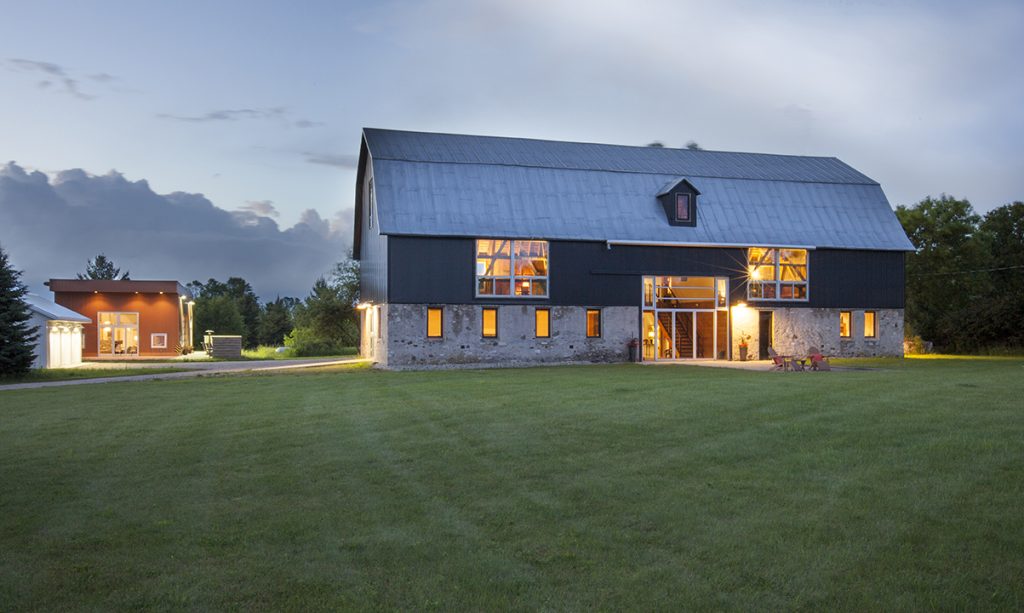
Back at Glenn and Mary’s cottage that night, as we prepared dinner and built a campfire, an idea emerged: What if this could become a place for both work and family? What if it became a leadership retreat center? Before long, we were unofficially workshopping the kinds of questions Jim Ryan would later articulate in Wait… What?: What if? I wonder? Couldn’t we at least…? Each question nudged the “daydream” a little closer to reality.
On my daily call with Jane the next day, I heard myself say, “Hey, remember when I said I didn’t intend to buy a house in Door County yesterday?” Jane hesitated and said, “Yes…” I replied, “Well, that’s still true. What I really want to buy is a barn.”
The barn’s story before me
The barn I eventually bought has far more history than I do. It began as a large Wisconsin dairy barn, surrounded by hundreds of acres of farmland, owned by a single family. With the onset of the Depression and the years that followed, much of the land was sold as dairy farming became increasingly difficult to sustain. Eventually, the barn was abandoned, left to weather the passage of time and neglect.
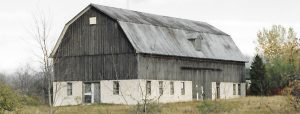
Despite those years left vacant, it remained standing—thanks to its strong stone foundation and steel roof, and, I would argue, a certain kind of stubborn grace. In 1989, a businessman, artist, and architect named Steve Wadzinski purchased the barn, envisioning it as an art education venue and gallery. He began a long, meticulous renovation, slowly coaxing the structure back to life.
Steve’s vision was nearing completion when he died in a tragic accident in 2006. The barn remained on the market for seven years, holding his unfinished dream, until August 2013, when I discovered it during a family visit. The work Steve had completed made it easy to imagine its potential beyond that of a dairy barn. I envisioned it as a meeting space for leadership development, a place where the work I had been doing in organizations might take on a more contemplative, restorative shape.
The more time I spent in Door County, the more convinced I became that the barn and this landscape would have the same effect on others as they had on me. Eventually, select leadership development programs found their way into this space, and the barn opened as a retreat venue for others as well.
Stewardship: joining a story already in motion
I don’t usually describe myself as the “owner” of the barn. More often, I think of my role as a steward, occupying one part of the barn’s story and continuing the loving investment of time and energy evident in Steve’s work. I don’t know Steve and can’t speak for him or his family. What I do know comes from a packet of materials I received at the time of purchase and a collection of prized photographs documenting the transformation as it unfolded. I know a bit more from a surprise visit one summer during our early years here, when an artist drove down the long gravel drive, parked, and introduced himself as a former student of Steve’s.
He told us he had taken art classes from Steve in Green Bay and had traveled up with other students to help with the renovation. As we walked the property together, he shared stories that deepened our sense of this place and of the community that had helped bring it back to life. He was genuinely excited to see how much things had evolved.
It reminds me of the night we hosted an open house. The realtor who had held the listing for seven years walked with me as we toured the property. As we stepped into the central hallway, about to head up to the lofts, he paused and said, “I just got goosebumps.” Looking up at the barn’s ribcage ceiling, lit and the barn alive with people, he added something like, “This is what this place was meant to become.”
Standing there, I realized I hadn’t simply bought a building. I had accepted a role in a story that belonged to more than one person.
What does this have to do with “calling”?
I tell this story not because everyone should buy a barn ten hours from home, but because it illustrates something I’ve seen in both research and in life: sometimes what we call a “calling” arrives disguised as a place, an invitation, or someone else’s unfinished vision.
The language of vocation and calling suggests that meaningful work is often experienced not merely as a choice but as a summons from a community, a tradition, a sense of purpose, or an inner voice that keeps whispering, “Pay attention.” In my case, that summons came through a landscape (Door County), a structure (a dairy barn on eight acres), and the echo of another person’s dream for an art and learning space.
I didn’t set out to reinvent my work or relocate part of my life around a barn. Yet, over time, my experience there began to align with what the research describes: the feeling that this place was congruent with my strengths and values, that it allowed me to craft my work, to reshape when, where, and how I work with people, so it better fits the life I’m called to live in this third period of life. Studies of calling and job crafting suggest that when people shape existing roles to fit their values and strengths, they often report greater engagement, commitment, and well‑being, including midlife and beyond.
Place, Pollan, and the architecture of daydreams
In A Place of My Own: The Education of an Amateur Builder, Michael Pollan recounts the story of designing and building a small writing hut on his Connecticut property: eight feet by thirteen, just enough for a desk, bookshelves, and the tools of his craft. He describes it as “the architecture of daydreams”—a physical space built to shelter and encourage a particular kind of inner life. I read this book with great joy years before my first trip to Door County. Not only is the book beautifully written, but it also speaks to a yearning we all share—A Place of My Own. For me, having spaces that feel like “a place of my own” fuels the autonomy, mastery, and purpose required for performance excellence. It can even be a chair in a corner, which is where I am crafting this blog. This collection of places provides the space to do our work and make our contribution.
In some ways, the barn is my scaled‑up version of that hut. Pollan’s project was about creating a room of his own making; mine has been about inhabiting a room of someone else’s making and shaping it into a place where leaders can step out of daily urgency and into deeper reflection. Both stories point to the same truth: sometimes we need a place—a literal, physical space—to embody the work and life we are called toward.
Making work your calling: crafting what already exists
Another book that has influenced my thinking is Bryan Dik and Ryan Duffy’s Make Your Job a Calling: How the Psychology of Vocation Can Change Your Life at Work. Their work, and the job‑crafting research they build on, focuses less on starting over and more on reshaping the work and contexts we already have.
Job crafting is the process of altering our tasks, relationships, and mindset to better align our work with our sense of meaning and purpose. At the barn, I’ve done exactly that: transforming what was once a dairy operation and then an art education venue into a leadership retreat center, all while honoring the spirit of creativity and learning that Steve envisioned. The work echoes what we’ve learned from neuroplasticity and adaptation in later life: if our nervous system can wire itself into chronic vigilance through repeated exposure to threat, it can also wire itself toward steadiness and purpose through repeated cues of alignment and meaning.
The point is not that everyone has a barn waiting for them. The point is that many of us already stand inside “places” and roles that could be crafted—subtly or significantly—to become part of our calling.
Insight / Reflection: listening for your own places of calling
So what might this mean for you, especially if you’re in the third stage of life and wondering what’s next?
You might ask yourself:
- Where in my life have I been “skiing uphill” toward responsibility, while quietly longing for a place or role that feels more like a home for my calling?
- Which places—literal or metaphorical—consistently leave me feeling more whole, more myself, or more at peace?
- What stories, roles, or spaces am I already stewarding, even if I haven’t named that role yet?
Action / Practice: experimenting with calling and stewardship
You do not have to buy a barn or overhaul your life this week. You can start by offering yourself a few repeated cues—moments of listening to what places, roles, and relationships are asking of you now.
- Trace the places that have restored you.
Make a short list of places—geographical or otherwise—that have consistently left you feeling more whole. Ask: what kind of life is this place inviting me into? What small experiment could I make there—a day, a conversation, a pilot retreat, a different rhythm? - Name one role or environment you could “craft.”
Choose a current role—work, a volunteer position, family role, or creative project—and ask: what tasks, relationships, or perspectives could I reshape to bring it closer to my sense of calling? Small changes in how you spend time, who you work with, or how you frame your contributions can add up. - Adopt the stewardship question.
Ask yourself: “What am I already stewarding?” It might be a story, a space, a practice, or a relationship. Consider one small way you could honor the history you’ve inherited while making it more fully your own—whether that means inviting others in, using it to serve a new purpose, or simply caring for it with renewed attention. - Give yourself companions for the journey.
If this theme resonates, consider spending time with Michael Pollan’s A Place of My Ownand Bryan Dik & Ryan Duffy’s Make Your Job a Calling. One book will invite you to think about place and the architecture of your daydreams; the other will help you craft your existing work into something that feels more like a calling.
In both nervous systems and callings, redemption rarely means starting over; it means allowing restoration—letting what has carried us this far find a steadier, more fitting way to serve in this third period of life. I don’t think of this as a story about real estate; I think of it as a story about listening. I am so grateful that I listened and then asked James Ryans five questions when I felt this call and connection to the barn the moment I saw it. These are the powerful questions Ryan invites us to use daily: Wait … What? I wonder? …, Couldn’t we at least?, How can I help?, and What truly matters? As you leave these words, consider this: What place, relationship, or unfinished vision in your own life might be asking for your stewardship—and what could your third period of life look like if you crafted your work and world to fit the person you’ve become and will be?
Books of Interest:
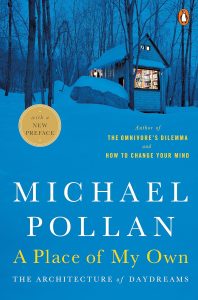
A Place of My Own: The Education of an Amateur Builder
Michael Pollen
This book beautifully chronicles his journey to design and build a small writing hut, a literal “architecture of daydreams” where his inner and outer work could align. Pollan shows how attending carefully to place, to light, landscape, and the feel of a room, can change not only how we work but how we inhabit our own lives. For readers in the third period of life, his story illustrates that it is never too late to shape a space that reflects who you are becoming and to let that space invite a different pace, focus, and contribution.
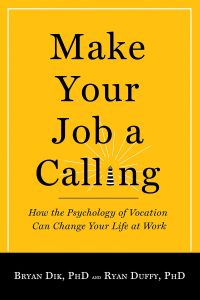
Make Your Job a Calling: How the Psychology of Vocation Can Change Your Life at Work
Bryan Dik and Ryan Duffy
This book translates decades of research on vocation and job crafting into practical guidance. They show how people can reshape existing roles by adjusting tasks, relationships, and the way they interpret their work so that daily life aligns more closely with a sense of calling and meaning. For those in the third period of life, the message is particularly hopeful: you don’t always need a new career to thrive; you can re‑craft how and where you offer your gifts, treating this stage as a chance to live more intentionally into the work only you can do.
References
Dik, B. J., & Duffy, R. D. (2009). Calling and vocation at work: Definitions and prospects for research and practice. The Counseling Psychologist, 37(3), 424–450. https://doi.org/10.1177/0011000008316430
Dik, B. J., & Duffy, R. D. (2012). Make your job a calling: How the psychology of vocation can change your life at work. Templeton Press.
Duffy, R. D., Dik, B. J., Douglass, R. P., England, J. W., & Velez, B. L. (2018). Work as a calling: A theoretical model. Journal of Counseling Psychology, 65(4), 423–439. https://doi.org/10.1037/cou0000276
Pollan, M. (1997). A place of my own: The education of an amateur builder. Random House.
Pollan, M. (2008). A place of my own: The architecture of daydreams. Penguin Books. (Original work published 1997)
Ryan, J. (2017). Wait, what?: And life’s other essential questions. Harper.